Flat Clearance Bethnal Green — Health & Safety Policy
 This Health and Safety Policy defines the approach of Flat Clearance Bethnal Green to managing risks associated with flat clearance and rubbish removal operations. It sets out the responsibilities, safe systems of work and standards that apply across our waste removal service area. The policy aims to protect staff, contractors, clients and members of the public by ensuring that all foreseeable hazards arising from clearance, transport and disposal of domestic and commercial refuse are controlled to an acceptable level.
Scope and objectives
The policy covers every activity carried out by our flat clearance and rubbish removal teams, including manual handling, segregation of recyclable materials, safe operation of vehicles and equipment, and work in confined spaces such as lift lobbies or small storage rooms. Our objectives are to: prevent injury, reduce occupational illness, avoid property damage and ensure legal compliance with applicable safety standards. This document is a statement of intent and provides a framework for implementing detailed procedures, risk assessments and ongoing review.
Responsibilities
All staff must cooperate to achieve safe outcomes. Senior management will ensure adequate resources for safety, appoint competent persons to manage operations, and review performance. Supervisors are responsible for task-specific risk assessments and for confirming that teams are trained and equipped. Individual workers are required to follow instructions, use provided personal protective equipment and report hazards. Contractors engaged for specialist removal services must demonstrate equivalent safety arrangements before commencing work.Risk assessment is a continuing process. Before each clearance job, a site-specific assessment will be performed to identify hazards such as sharps, hazardous waste, unstable furniture, and trip or fall risks. Control measures will be implemented using the hierarchy of controls: elimination, substitution, engineering controls, administrative measures and finally personal protective equipment. High-risk items (e.g., flammable liquids, asbestos-suspect materials, or biologically contaminated waste) will be isolated and handled only by authorised personnel with specialist protocols.
 Safe working arrangements include:
- Clear written and verbal briefings for each job, including lifting plans and traffic management where required;
- Use of correct equipment such as sack trucks, straps and protective gloves to minimise manual handling injuries;
- Segregation and correct labeling of waste streams to prevent cross-contamination and to support recycling objectives;
- Vehicle safety checks and secure load procedures to reduce road risk during rubbish collection and removal.
Training and competence are essential. We provide induction training for new employees, periodic refresher courses, and on-the-job coaching for specific tasks. Records of training, licences and medical clearances where applicable are maintained. Where work involves lone-working, staff follow a defined lone-worker protocol that includes regular check-ins and emergency response arrangements. Supervision levels are determined by the task complexity and risk rating.
Incident reporting and investigation enable continuous improvement. All accidents, near-misses and dangerous occurrences must be reported promptly, investigated to determine root causes, and followed up with corrective actions. Lessons learned will be communicated to affected teams, and records kept for management review. We maintain a non-punitive reporting culture to encourage staff to raise issues without fear of reprisal.
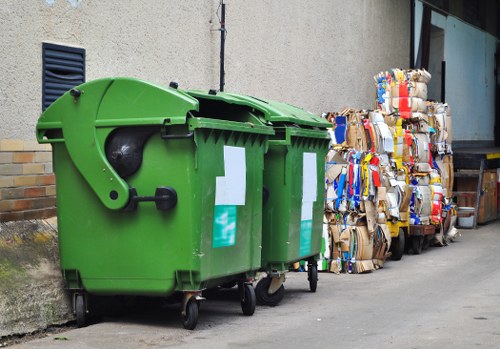 Emergency preparedness includes first-aid provision, access to emergency equipment, and clear evacuation procedures. Vehicles carry spill kits and basic first-aid supplies appropriate for typical clearance hazards. We liaise with emergency services when necessary and ensure that emergency access routes are kept clear. In circumstances involving hazardous substances, specialist contractors will be engaged and regulatory notifications made as required.
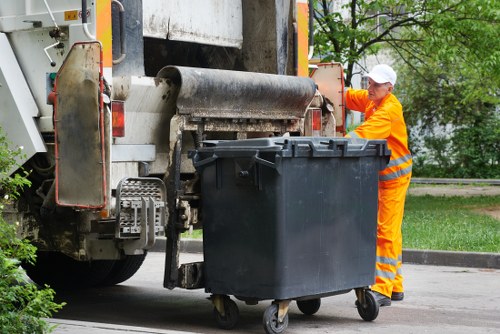 Monitoring, review and continual improvement are integral components of this policy. Management will conduct regular safety audits, performance reviews and risk reassessments to ensure the effectiveness of controls. Key performance indicators include accident frequency, corrective action completion rates and compliance with training schedules. The policy will be reviewed at planned intervals and updated in response to changes in legislation, technology, operational practices or following significant incidents.
Implementation and compliance — This policy is supported by written procedures, job-specific risk assessments and documented training. All employees and contractors are expected to comply fully. Non-compliance will be addressed through remedial training, supervision or disciplinary measures where necessary. By following this policy, our flat clearance and rubbish removal teams will maintain a safe working environment and provide a professional, responsible service across the areas we serve.
Policy approval and review — This Health and Safety Policy has been authorised by senior management and will be made available to all staff. It is subject to periodic review and may be amended to reflect operational or regulatory changes. The commitment to safety underpins our business and is central to our service delivery ethos for responsible rubbish clearance and waste management activities.